
The evolution of survival.
By Ana Tzubery
In the geography of my kitchen table, over a sea of open textbooks and half-eaten apples, laptops and dangerously close to them, two glasses of milk, my two sons were engaged in a grim struggle with the chronicles of the anthropoids. They were studying human evolution; that long, dusty parade of bone structures and crusty tools that supposedly explains how we came to be the upright, wired-by-weird-electronics creatures we are today.
I sat down to play the role of the inquisitor, hoping to nudge a spark of wisdom from the afternoon’s gloom. “Give me an example of natural selection,” I said, leaning in. “A trait that helped our kind survive when the rest of the world was all teeth and claws.”
The elder son, an eager practitioner of the “short-cut” school of philosophy, didn’t look up. He offered the practical currency of the realm: education and physical health. He was confident, and rightfully so, that his answer would suffice to buy him freedom from the table.
The younger one, the one who prefers to dig for buried treasure in the footnotes of his mind, shot his answer at me in a heartbeat.
“Adoption,” he said.
The air in the room suddenly felt a bit more charged. I was prepared for a lecture on the gray matter of the cerebral cortex. Instead, he dropped a bombshell into a glass of milk. On the surface, of course, adoption is a biological glitch; it doesn’t pass on the specific coins of one’s own genetic mint. But my son was brought from a different script. He saw that our clan had survived not because of one magical genetic trait. We carry an almost endless assortment of personalities, skills, passion, and patience to care for the stranger as if they were our own bloodline.
That conversation sent me back to Darwin’s well-known theory. We were taught in school that his Descent of Man is a ledger of the ruthless, but if you read between the lines, as I did, it is a love letter to the social instinct. Darwin saw that the tribes that flourished weren’t just the ones with the strongest biceps but also the most sympathetic. Compassion wasn’t a weakness; it was the ultimate evolutionary advantage.
As I listened to my son, I realized I had been carrying this truth in my pocket since I was a girl myself. Before I ever studied Darwin, I had another “bible” that lived on my desk: Anton Makarenko’s A Pedagogical Poem.
This wasn’t a book presenting “sweet charity.” It was a rugged, hard-to-swallow account of building a community for the homeless, traumatized orphans of the Russian Civil War in the 1920s. Makarenko taught me that care is a delicate mix of craft and art. That you could take a broken soul and architect a home from it through tears, sweat, and a relentless sort of love.
A Pedagogical Poem was the map I used to navigate my own developing heart. I grew up among WWII survivors, hearing stories of children who had wandered the ruins of shattered cities, fearful, hungry, and dangerously alone…until they met a caring human. These adults, with nothing but their own shadows, still managed to share a crust of bread or a cold corner of a floor, often risking their lives for a child they had just met. There were no manuals or expectations of any kind; only a bone-deep recognition that leaving a child alone is a tragedy the human heart simply cannot allow.
History, if you are interested to know, is quite fond of this kind of “evolutionary intelligence.” Louis Armstrong was born into crushing poverty, with no stable parents to give him a decent life. By age 7, he was taken in by the Karnofskys, a Lithuanian Jewish family who had barely two nickels to give their own flesh and blood.
They saw a boy in need and treated him as their own. They didn’t just feed him; they gave him dignity and blended their identities. They even took out a loan to help him buy his first cornet. They didn’t do this to preserve their own DNA; they did it because a human life was worth the investment. Now, I ask you: can you imagine a world without Armstrong’s enduring music? Or Cary Grant’s gorgeous smile? Or Mark Twain’s witty books? These could be “lost” yet survived and thrived through the structural survival of care.
Today, when well-meaning folks pat me on the back and say, “You are amazing, I could never do what you do,” I feel a certain distance. The framing is all wrong. To me, parenting children who are not “mine” isn’t a moral performance on stage. It is my nervous system doing exactly what it evolved to do.
In my house, this isn’t theory; it’s a lifestyle. I have been a parent to many, some for a season, and others for a lifetime. My guiding principle is as simple as a lullaby: children cannot pause their development while the grown-ups “figure things out.” They need care in real time. Whether I am a bridge or a destination, the goal is continuity.
Modern humanity no longer needs bigger muscles to survive. We need emotional safety and social trust. Today, our culture is outpacing our DNA. Darwin realized that our moral instincts were what made us strong, and Makarenko proved those instincts could be forged into a home. My son, whose identity blended with mine without the involvement of DNA, understood the truth: adoption is the highest form of human adaptation
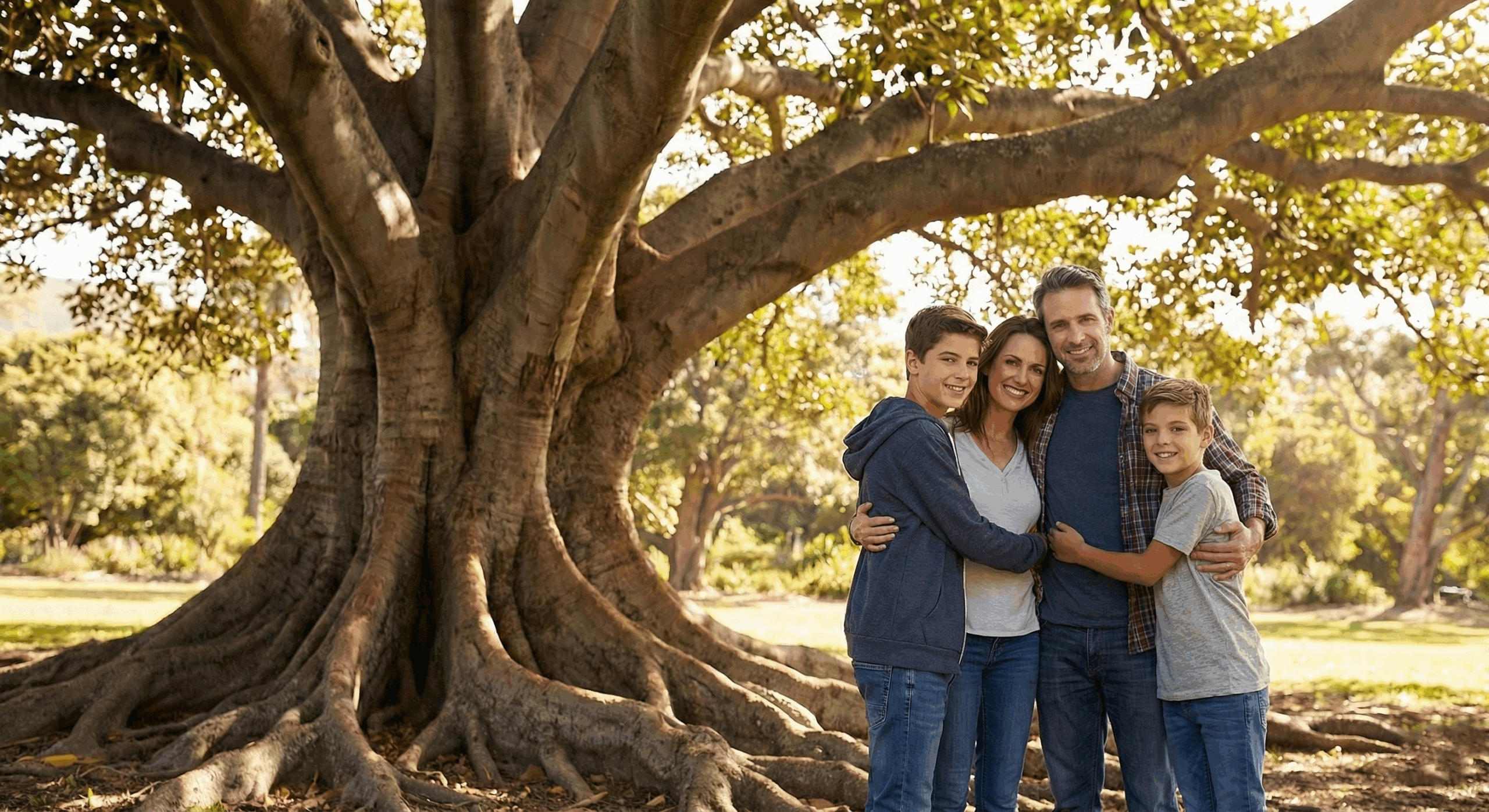
I look back at my boys at the kitchen table, already moving on to their next assignment. My family is a tribe in the best Darwinian sense. Whether our story fits the neat boxes of a science quiz or not, we will continue to honor that ancient, stubborn instinct that has kept us alive so far: the simple refusal to leave a child alone in the world.