What happened to this child before they became a parent?
More than a decade ago, I was caring for my foster son, a toddler. Before he came into my home, I had known his mother and tried to support her through difficult circumstances. Eventually, one of her many children entered foster care and was placed with me.
Not long afterward, social services arranged a visit so all eight siblings could see each other. Five foster families, two visitation monitors, and one overwhelmed mother gathered at a local park.
The children ranged in age from one to eleven. They ran in every direction, climbing playground equipment, chasing one another, and testing every adult’s patience. The visit should have been joyful, but it felt chaotic. Their mother had not been allowed to parent them for more than two years. Some of the younger children barely remembered who she was. The older ones had adapted to new homes because they had no choice.
As I watched her struggle to gather the children and manage the visit, I heard comments around me. Quiet remarks. Judgments about her inability to control her own children.
Then something uncomfortable happened. I found myself agreeing.
I felt myself slipping into the same mindset, looking at this exhausted woman and seeing only her failures. Measuring her against a standard, she had little to no chance of meeting at that moment.
This realization unsettled me. I had spent years advocating for struggling families, yet there I was, standing among people who believed they understood the entire story after watching a single hour of this mother’s life. That day, I promised myself to be vigilant. I never wanted to lose sight of the human being behind the case file.
When children enter foster care, we usually meet their parents at the lowest point of their lives.
By the time social workers become involved, families are often at the bottom of the well. We hear about failed drug tests, domestic violence, neglect, criminal charges, broken promises, and poor decisions. Sometimes we witness the consequences firsthand and are tempted to jump to a conclusion.
As foster parents, we focus on helping children heal. We provide safety, stability, routines, and opportunities. It is easy to feel proud of the difference we make. It is also easy to stop recognizing a biological parent as a person.
Over time, a mother or a father becomes a summary of allegations in court reports. Their identity shrinks into the frame of the worst decisions they have ever encountered.
Yet life is rarely that simple. As Leo Tolstoy wrote, “All happy families are alike; each unhappy family is unhappy in its own way.”
Behind every case file is a different story. Behind every court hearing is a life that began long before the system became involved. The parent who loses custody of a child is also somebody else’s child.
They were once a girl hoping for her father to come home. Or a hungry boy with no one to share his fears or his dreams.
They were children trying to learn what love felt like, what family was supposed to look like, and what it meant to feel safe.
Many never had the opportunity.
Over the years, I have met biological parents who grew up surrounded by addiction, violence, rejection, and betrayal. Some spent their formative years in foster care. Many have never experienced healthy relationships, adequate communication, or supportive parenting.
I remember one very young mother whose baby eventually came into my care. During one of our conversations, I told her she was smart, beautiful, and worthy of love. She cried because those words were extraordinary for her. No one had ever said them to her before.
I remember another mother who, despite being an adult with children of her own, was still desperately seeking approval from her own mother.
Repeatedly, I encountered parents carrying open wounds of their own childhoods.
People often wonder why some of the biological parents continue making the same mistakes.
Sometimes the answer is painfully simple. You cannot present something you have never experienced.
A person who has never experienced stability may struggle to create it.
A person who has never formed healthy attachments may love their children deeply and yet fail them.
Children deserve protection and safety. When necessary, they must be removed from dangerous situations. Understanding this does not excuse harmful behavior, but accountability and compassion can coexist, as neither requires the absence of the other.
The longer I do foster care, the more convinced I become that children suffer when the important adults in their lives reduce one another to labels.
A foster parent who sees only the failure of the biological family hurts the soul of the child he takes care of.
A biological parent who sees only an enemy in the foster family significantly reduces his chance of reunification and loses an amazing opportunity to extend his family with people who truly love and care for their child.
Children are gifted at seeing people. A child may be angry with a parent and still love them. A child may feel safer in foster care and still miss his home. A child may recognize a parent’s flaws and still long for their approval.
I have watched parents recover from addiction, complete reunification plans, rebuild relationships, and become better mothers and fathers than anyone expected.
I have also watched parents fail despite being given every opportunity.
But regardless of the outcome, I try to remember what I learned that day in the park.
Before asking what is wrong with a parent, I ask: “What happened to this child before they became a parent?”
That question does not change my responsibility to protect children. But it changes the way I see parents, and it might help them heal.
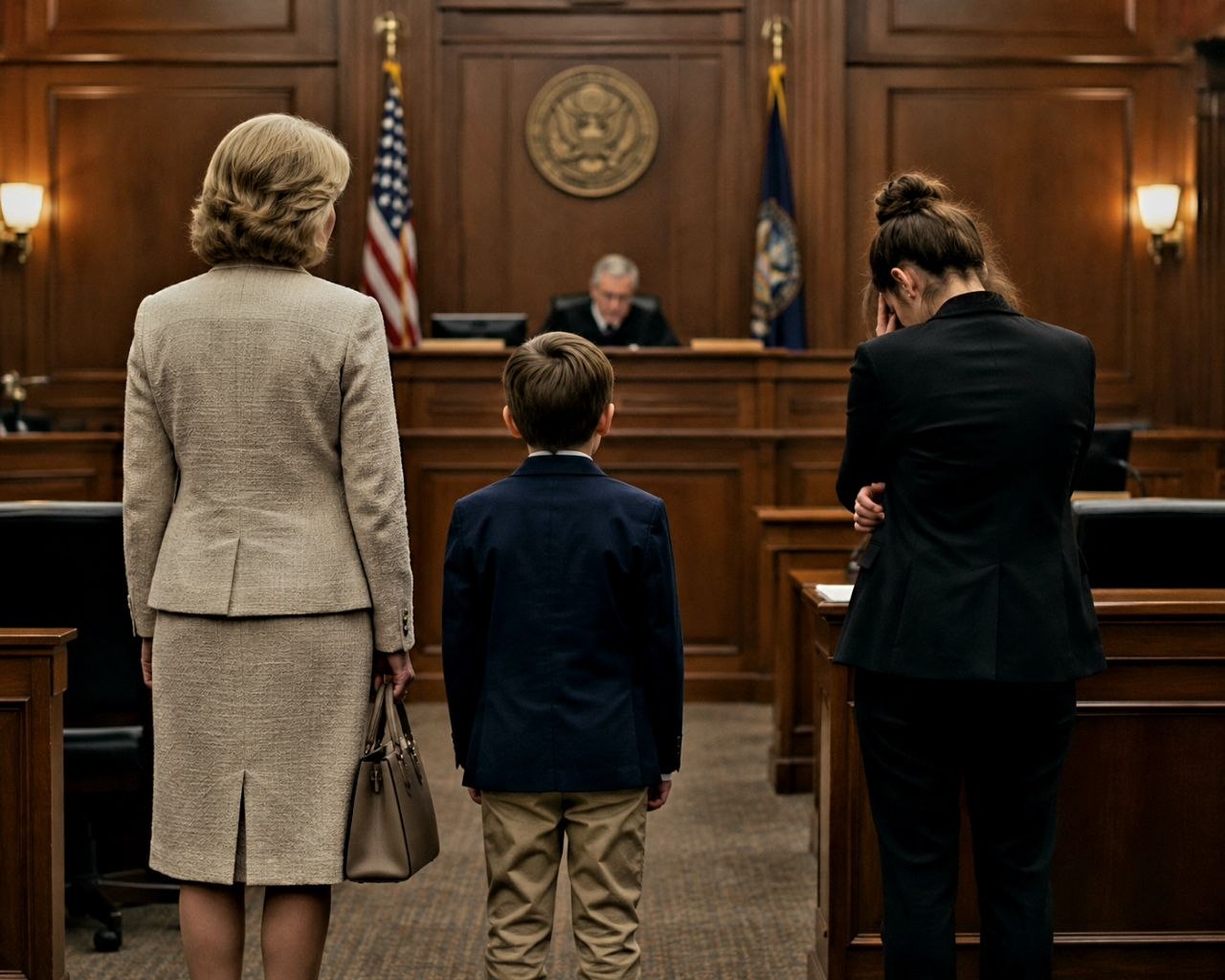
Every parent standing in a dependency courtroom was once a child hoping for guidance, love, and a word of encouragement.