
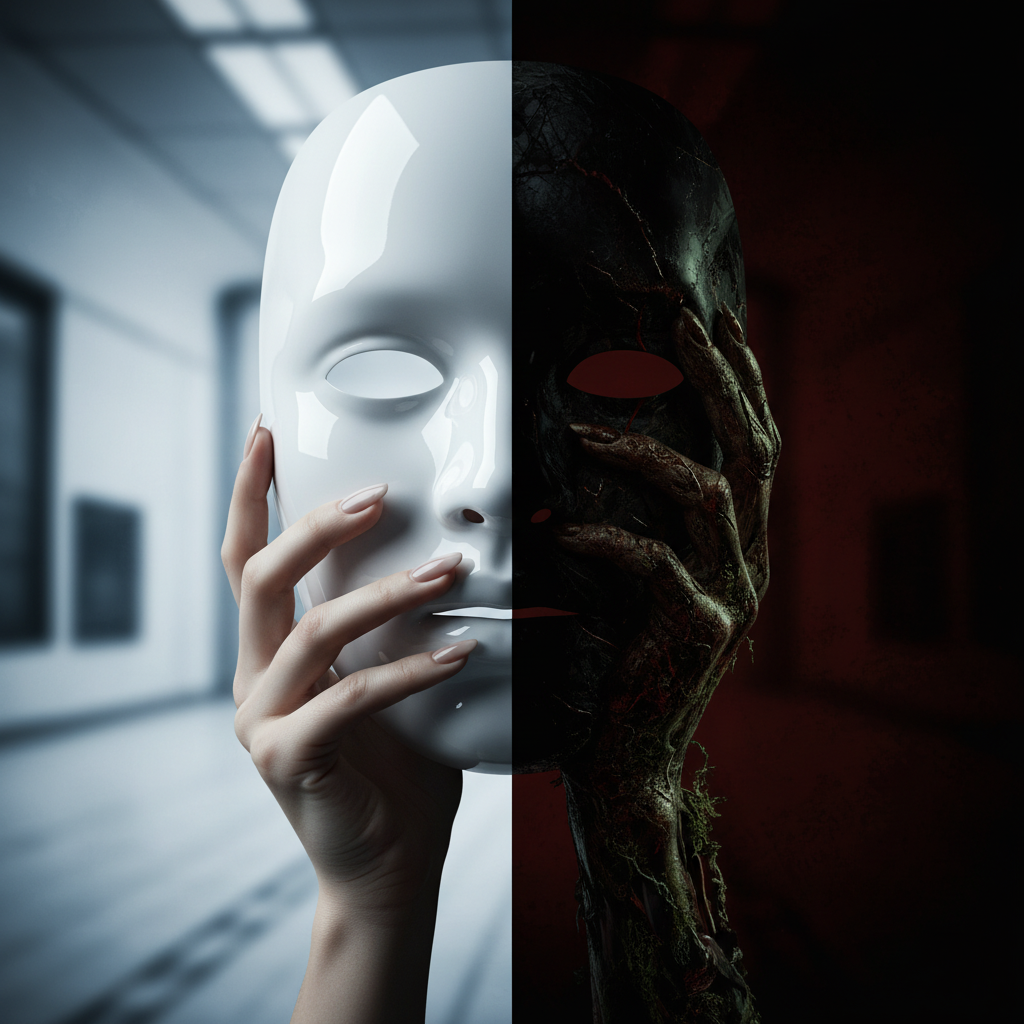
We live in a culture where society has desecrated death and spread it widely. On one hand, the modern funeral industry scrubs the death from the body. Death is made up, embalmed, painted, perfumed, and finally displayed like a sleeping beauty to shield us from more trauma. On the other hand, the media bombards us with images of killing, mutilation, and gore. We consume it while eating dinner, endlessly scroll through, discuss, and freely joke about online.
What has been lost between those two opposite poles is an honest encounter with death itself. We neither confront our dead in their raw state nor truly honor their legacy when they die. We hide the reality of the body when it is too close and makes us uncomfortable, yet we quickly turn someone else’s death into a spectacle because it doesn’t disrupt our daily routine.
Our modern society has almost fully commercialized the journey of a body after death. The dying human is hospitalized. The dead body is moved to the morgue, and the family gets back only something that has been polished and stylized. Makeup covers blemishes, clothing conceals the decay, and chemicals spare us from the unpleasant odor and visible signs of decay while the body is still above the ground.
Even when families choose an open casket, the corpse is usually displayed airbrushed and perfumed. Some choose instead to receive a tasteful urn of ashes. The very rituals that once forced us to stare into the face of mortality now deceive us with a comforting, artificial substitute for the truth.
Historically, mourning traditions have served as a vital social function: providing a ritualistic way to grieve to ensure respect for the bereaved. In 18th-century Europe, for example, the custom of wearing black for an extended period was a public marker of loss. This visual cue signaled to the rest of the community that the mourner required space, time, and privacy, and the society mainly responded with kindness and understanding. The need to process loss is part of our acquired emotional intelligence, and many religious communities strive to preserve that need through their ancient funeral ceremonies and postmortal traditions.
In the Jewish faith, the family sits “shiva” for seven days after a funeral, a practice that gathers the mourners together under one roof. Neighbors and friends visit daily, bring food and stories. It does not mean to impose or to entertain; instead, it affirms that life continues beyond loss. It encourages the bereaved to confront their sorrow within the community, to process change together, and to understand that mourning is not a burden, but a shared responsibility carried with the support of others.
Just a century ago, in Russia and Eastern Europe, the rituals of mourning were intimate and carefully structured. For three days before burial, the deceased remained at home, the body carefully washed by loved ones and laid in a candlelit room. Neighbors would come and go, offering prayers, help, and toasts to the memory of the departed. This communal presence extended long after the funeral, with gatherings on the third, ninth, and fortieth days to share food and ensure the grieving family never felt isolated. For this entire period, mourners wore black, a public signal of their loss that asked for gentleness from the world.
This direct, communal engagement with death is a global tradition. In Hindu practice, the family personally washes and prepares the body before carrying it to the cremation pyre. Similarly, the Muslim community washes the deceased, wraps the body in simple white cloth, and buries it without makeup or chemical preservation, an honest return to the earth. These traditions, vastly different, all share an undeniable truth: death is tangible, visible, and a shared experience.
These traditions are neither clean nor easy, but they teach respect, dignity, and the hard truth. Death is never pretty. Grief takes time. It cannot be learned from a deceased taken away, a closed casket, or a sanitized urn.
Much of secular Western society consumes death as an entertainment. News endlessly replay acts of violence. Social media amplifies graphic content, glorifying death for spectacle. This constant exposure desensitizes us to on-screen brutality yet leaves us fragile when confronted with the harsh and simple reality of mortality. Millions can watch fictional beheadings or footage of distant wars without flinching, but the sight of a discolored hand in an open casket can provoke profound shock and denial.
When Charlie Kirk was lying in an open casket, many who saw the image were fixated on his hands. They appeared waxy, yellowed, almost “plastic.” Some even insisted the body was fake, a mannequin staged for the funeral. The truth is ordinary: that is simply what death looks like. Blood drains and settles, skin shifts color, embalming alters tone. These are the signs of a body that is no longer alive.
The disbelief itself was more of a reflex to escape. For many people today, encounters with death arelimited bythe size and the filter oftheir blue screens. They expect smooth skin, gentle lighting, and the perfect camera angle. When faced with the brutal reality of post-mortem change, many retreat into conspiracy theories or mockery. Our distance from the raw presence of death has grown so vast that we often fail to recognize it when it finally stands before us.
It is not just ignorance. These days, it appears more like a moral collapse. Modern society has developed a selective way of reaction. We sentimentalize the deaths of those we value, while celebrating or mocking the deaths of those we dislike.
This is the final step of a culture that has sanitized its own funerals and consumed too much death as spectacle. Death is no longer sacred; it has become the new normal. And when life becomes cheap enough to cheer its ending, empathy itself has turned suicidal.
Death, once the great equalizer, had been turned into applause.
Charlie was a bright young man who liked debating. You could hate his politics, but he never raised a gun, never attempted to spill the blood of those who opposed him. The reaction to his tragic end of life in front of thousands of people holding a microphone, echoed a lynch mob: celebratory, cruel, and blind to the fact that a human being was gone. People congratulated each other as if a man’s life were nothing more than a political trophy.
Death is supposed to be uncomfortable; its purpose is to force a confrontation with what we would rather avoid. When we reduce this profound event to viral content, we strip it of the one lesson it has always offered: humility.
So, when you watch death on a screen, ask what you are truly learning. To replay or share the video of a woman like Iryna Zarutska’s stabbing does not honor her; it dehumanizes her memory. Sharing gore is not mourning. Celebrating death is not justice. To relish the video of a young woman’s slaughter is not righteous; it is barbaric. It makes us no different from the Roman crowds who once feasted and roared with delight as gladiators hacked each other to pieces for their entertainment.
A society that cannot honestly face death cannot truly value life. By sanitizing the funerals of our own and weaponizing the deaths of others, we create a culture that is simultaneously fragile and cruel. Fragile, because we can no longer look at the discolored hand of a dead man without recoiling in denial. Crue, because we learn to justify ending the lives of those who dare to think differently or who simply fail to arouse our empathy.
Death demands respect from the living. Mocking a young widow, fabricating fake news for personal gain, or jesting at the expense of a grieving family represents not progress, but a deeply rooted cultural decay. We are not advancing as a society; we are simply rotting from the inside out. This is the wake-up call, the one we must dare to answer